
What's the Deal with the Moon?!
We have plenty of urgent problems on Earth to attend to first

Shortly after my wife and I moved to Texas after finishing graduate school my parents came to visit us in Houston. We took them to Johnson Space Center, because my mother had always been in awe of NASA. I only saw her eyes really light up twice: once when a doctor told her that I would be a good candidate for medical school (sorry, but no thank you), and once when I applied to NASA for an engineering job. Mom was in college when President Kennedy was assassinated, and she often said that she remembered everything about that day like it had just happened. I confess that it is hard for me to transport myself into the supercharged cultural and political environment of the Space Race. I also realize the immense pressure Americans felt to “beat the Russians,” even though we had only a few years earlier been their World War II allies. I’m all for cheering Team USA at the Olympics, but I think our national tendency to treat every international issue as a must-win, no-holds-barred, fourth-and-twenty Hail Mary football game play with one second on the clock is rather foolish.
Source: Openverse
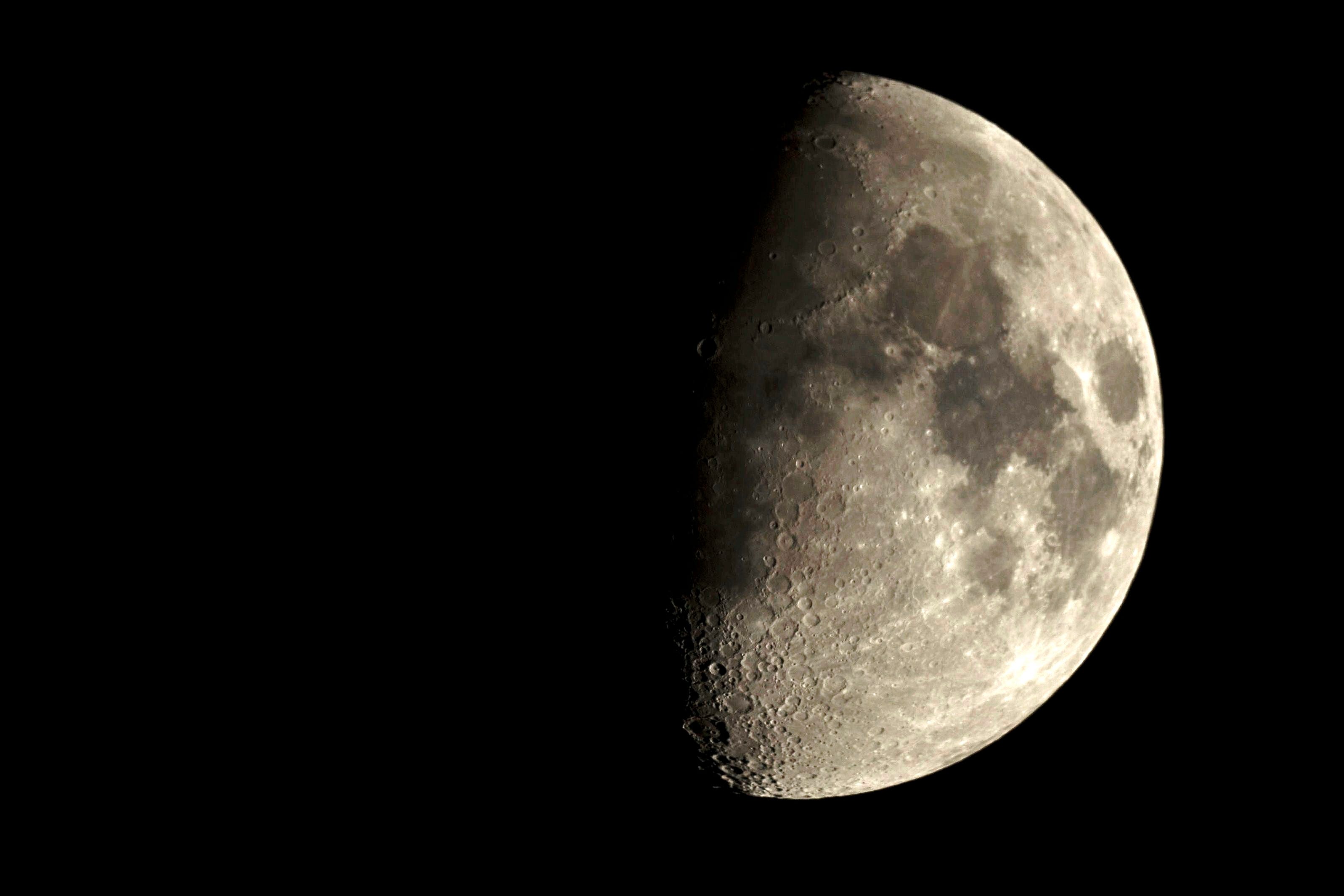
So, you’ll have to forgive me if I don’t enthusiastically applaud Transportation Secretary and part-time NASA Administrator (he’s moonlighting…get it?) Sean Duffy’s plan to build a nuclear reactor on the moon. First of all, we’ve been there. It’s a big empty rock. Awesome for golfers, but otherwise forgettable. That’s why we left when I was three years old and never went back. Why now? Because China!!! “If we let the Chinese Communist Party beat us to the moon…I mean beat us back to the moon…” This fevered line of thinking is almost verbatim what led to the Cold War strategy of containment, the zero-tolerance policy that induced us to squander billions of dollars and thousands of young lives in places like Korea and Vietnam and to turn a neighbor (Cuba) into an enemy. Did it work? Not at all. The Soviet Union crumbled because it failed to meet the needs of its citizens, irrespective of our bungled meddling. All we did was divert generations of resources from domestic infrastructure maintenance and our own civilian prosperity to feed the military-industrial complex. And the beast is still hungry, which is why it needs to nurture a new existential enemy in China.
Yes, of course, the United States must protect its vital national interests. But not all interests are vital. I am not a great military strategist, but the engineer in me says that if we struggle even to keep the Navy’s ships afloat or to build a functional handgun for the Air Force, then we might want to take a step back before designing a new lunar fortress. For all today’s talk of once-in-a-generation technological transformations, we used to be able to complete these relatively simple defensive tasks with ease. There were once thirty shipyards in the San Francisco Bay area and, over the 1,365 days of World War II, they launched 1,400 vessels. Contrast this with the Wall Street Journal’s recent reporting that:
“The Navy’s difficulties with ship repair increased in the 1990s, when the U.S. halved the number of public shipyards mandated to maintain nuclear aircraft carriers and submarines. The four remaining government-owned yards were set up over a century ago, designed to build wind- and steam-powered ships. They suffer from aging infrastructure, with more than half their equipment past its expected service life, according to the Government Accountability Office.”
(As for handguns, my grandfather carried a Smith & Wesson revolver—that he inherited from his own father—his entire adult life. It still works just fine.)
Yes, I understand that many wonderful modern technologies can trace their lineages to research conducted on behalf of the Apollo program. In terms of relative GDP, Apollo consumed what would have been over $700 billion in 2019 economic output. If we truly, absolutely had to have a Dustbuster, could we not have conducted the R&D elsewhere for much less? The Trump Administration is actively engaged in a war against American universities, threatening to withhold hundreds of billions of dollars in research funds as retaliation for “DEI programs” and other perceived political insults. The U.S. higher education system is one of our nation’s crown jewels. Like shipbuilding, machine tool manufacturing, and world-class rail transportation, we appear intent on throwing it in the trash. I do not want to defund NASA. I appreciate the value of astrophysical research and satellite communication technology. But colonization of other worlds? Maybe if we were all really crushing it here on Earth…world peace, no hunger, sustainable energy and material consumption habits… Clearly that is not our situation here. Too many people are suffering far too much for us to be focusing sizable amounts of our attention and resources on trying to be Number One for the sake of planting another flag and minting another commemorative coin.